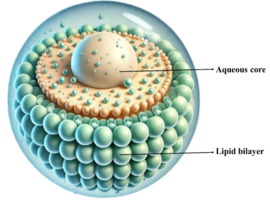
Globally, cancer remains the second most common cause of death, posing major therapeutic challenges due to factors such as tumor heterogeneity, metastasis, and the limitations of traditional chemotherapy. Drug delivery methods based on liposomes have shown promise in overcoming these challenges. These types of phospholipid bilayer liposomes will encapsulate both hydrophilic and hydrophobic drugs that can be directed to location of action by either passive (Enhanced Permeability and Retention effect- EPR) or active (ligands or antibodies). As a result, this approach improves the effectiveness of treatments while minimizing systemic toxicity. Advances in liposomal technology, such as PEGylated "Stealth" liposomes, improve circulation time and stability, exemplified by FDA-approved formulations like Doxil®. Recent innovations include pH- and temperature-sensitive smart liposomes and nanoliposomes, which exhibit enhanced stability, bioavailability, and precision targeting. Hybrid lipid-polymer systems and stimuli-responsive liposomes enable controlled drug release triggered by environmental or external cues like pH, temperature, or ultrasound. These advancements overcome challenges such as drug resistance, the blood-brain barrier, and off-target effects, paving the way for more effective cancer therapies. Liposomal systems now extend to combination therapies and theranostics, offering potential breakthroughs in personalized cancer treatment. These advancements improve tumor targeting, minimize systemic toxicity, and enhance therapeutic efficacy, contributing to better patient outcomes and advancing precision oncology. Ongoing research focuses on optimizing liposomal formulations to further enhance stability, efficacy, and clinical benefits.
Keywords: Liposome; Cancer; Stealth liposome; PEGylated liposome; EPR effect; Nanomedicine; Immunoliposome; Combination therapy